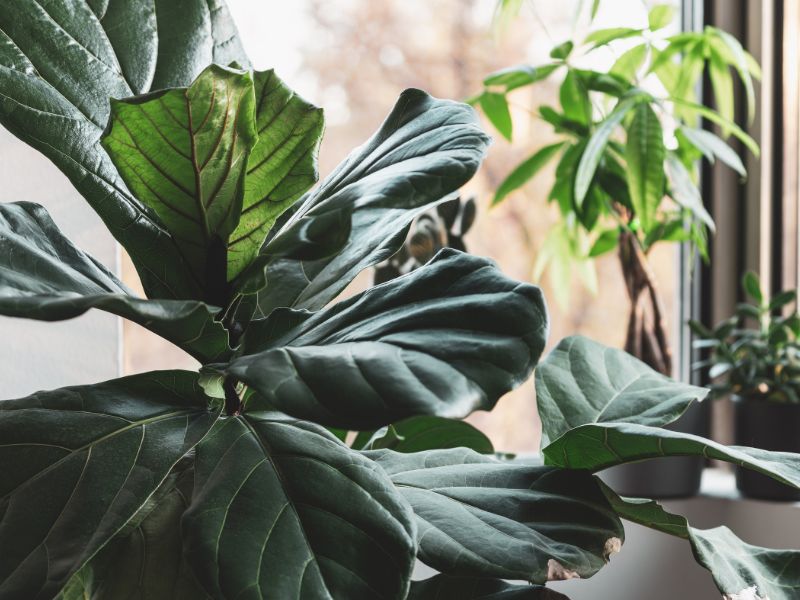
I kill houseplants. Not all of them , but enough that I’ve started paying closer attention to why. And the deeper I get into apartment gardening in the middle of the Phoenix desert, the more I notice how much of it overlaps with the work I do every day as an instructional designer.
That’s not a metaphor I’m reaching for. It’s something I actually think about while I’m repotting a fiddle leaf fig that’s somehow both overwatered and dying of thirst.
You Can’t Force Growth
My family has farmed in Iowa for generations. Long before I knew what “capacity building” meant in a professional development sense, I watched it happen in a field. You don’t make corn grow faster by yelling at it or by dumping on more fertilizer and hoping for the best. You build the conditions, the soil structure, the nutrients, the water, the spacing, and then growth happens because the environment finally allows it to.
Learning works the same way. You can’t force someone to retain a process by cramming more slides into a course or repeating a policy three times in bold text. That’s the L&D equivalent of dumping fertilizer on dead soil and wondering why nothing’s coming up. If the conditions aren’t right, if the learner doesn’t have the context, the motivation, or a reason the new skill actually matters to their day-to-day, no amount of content is going to make it stick.
Soil Health Is Invisible Until It Isn’t
Here’s the thing about soil: when it’s healthy, you don’t think about it at all. The plant just grows. It’s only when something’s wrong, yellowing leaves, stunted growth, a wilting stem, that you start digging around (literally) to figure out what’s missing.
Good instructional design works the same way. Nobody emails you to say “great job, this onboarding course had excellent scaffolding and a logical objective hierarchy.” They just… do their job well, faster, with less hand-holding from their manager. The design is working precisely when it disappears into the background. You only notice instructional design when it’s bad, when the course is confusing, the objectives don’t match the assessment, or new hires are still asking the same questions three weeks in.
This used to bother me a little, honestly. But it’s also the best compliment the field can get. Healthy soil doesn’t ask for credit. Neither should good design.
Different Plants, Different Soil
Anyone who’s tried to keep more than one houseplant alive in a desert apartment knows this fast: what works for a succulent will absolutely murder a fern. They don’t need the same water, the same light, the same soil composition. Treating every learner like they need the same “watering schedule” is one of the fastest ways to lose them.
This is where my teaching background and my plant-killing hobby actually agree with each other. A classroom of twenty-five kids never learned the same way, at the same pace, for the same reasons, and neither does a room of new hires going through onboarding. Some need more context before they can apply a skill. Some need to just try it and fail safely first. Some need the “why” up front or they’ll mentally check out by slide four. Universal Design for Learning isn’t just an accessibility checkbox, it’s an acknowledgment that one watering schedule doesn’t work for every plant in the room.
Capacity Building Is the Real Goal
In agriculture, the long game isn’t a single good harvest, it’s building soil that can sustain growth season after season without collapsing the moment conditions change. That’s regenerative agriculture in a sentence: build a system resilient enough to keep producing, not just a system that produces once.
That’s the version of L&D I actually want to practice. Not a one-and-done training that checks a compliance box, but learning experiences that build a kind of organizational soil health, where people have the underlying capability, confidence, and judgment to keep adapting long after the course is over. A single great onboarding session is a good harvest. A culture where people are actually equipped to keep learning is healthy soil.
I still might kill the next plant I bring home. But I’ve gotten a lot better at asking the right question first: not “why isn’t this growing,” but “what does this thing actually need in order to.”
That question, it turns out, is the whole job.

